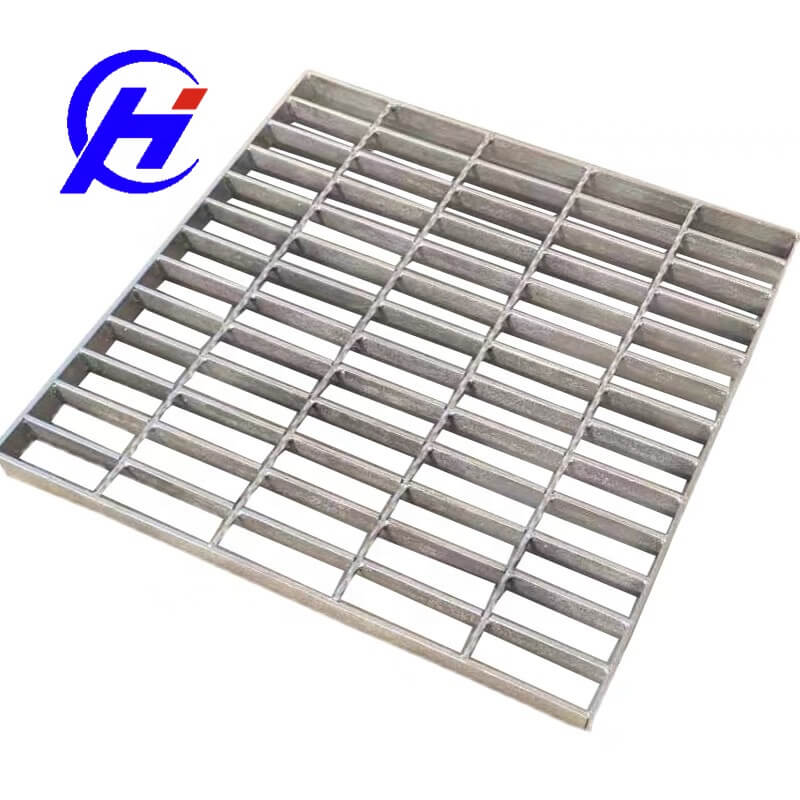
After the steel grating is treated with anti-corrosion galvanization, it is the galvanized steel grating we often say. Compared with the original steel grating, the galvanized steel grating has longer service life, more beautiful appearance, strong bearing capacity and easier installation. Commonly used galvanized steel grating includes cold galvanized steel grating and hot-dip galvanized steel grating. It is mainly classified according to the galvanizing process, cold galvanizing and hot galvanizing. The following is a detailed introduction of cold galvanized steel grating and hot-dip galvanized steel grating.
The operation of hot-dip galvanized steel grating is mainly to melt the zinc ingot at high temperature, put some auxiliary materials, and then immerse the metal structural parts into the galvanizing tank, so that a layer of zinc layer is attached to the metal components. The advantages of hot-dip galvanized steel grating lie in its strong anti-corrosion ability and good adhesion and hardness of the galvanized layer. The weight of the product increases after galvanizing. The amount of zinc we often say is mainly for hot galvanizing.
The cold galvanized steel grating is that the zinc salt solution is electrolyzed to replace the iron ions and zinc ions. Generally speaking, there is no heating, the amount of zinc is small, and it is easy to rust in wet environment.
The above is the difference between cold galvanized steel grating and hot galvanized steel grating, and also the processing method of galvanized steel grating.